Crate graph and architecture map
The workspace is layered. Shared infrastructure sits below every parser and a thin facade sits on top; no lower crate depends on the facade, and the two network crates do not depend on each other.
powerio-core          Source, FormatId, Diagnostic, Error, PioModule<T>,
                      TimePoint, TimeSeries<T>, ScenarioSet<T>, Destination
├── powerio-tx        BalancedNetwork and the balanced readers and writers
└── powerio-dist      MulticonductorNetwork and the OpenDSS, PMD, and BMOPF converters

powerio-prob          operating points, updates, the seven instances, the eight
                      solutions, and GO Challenge 3, OPFData, and BMOPF assembly;
                      depends on core, tx, and dist; matrix free
powerio-matrix        sparse matrices and graph data for both network families;
                      depends on core, tx, dist, and prob
powerio               PioValue, parse, emit, serialize, deserialize, and the
                      re-exports; depends on core, tx, dist, and prob, and on
                      matrix behind the `matrix` feature
powerio-cli, powerio-capi, powerio-py    over the facade
A change has to keep that shape. powerio-core owns no electrical type,
parser, matrix, instance, or IR record layout. powerio-tx and powerio-dist
stay usable on their own, so a distribution consumer pulls in neither the
balanced model nor the matrix stack. powerio-prob does not depend on
powerio-matrix. The facade re-exports the component crates, which is why
cargo add powerio gets you everything, and its matrix feature adds the
matrix crate without creating a cycle. CI checks these edges against
cargo metadata, so the map below and the manifests cannot drift apart.
Components
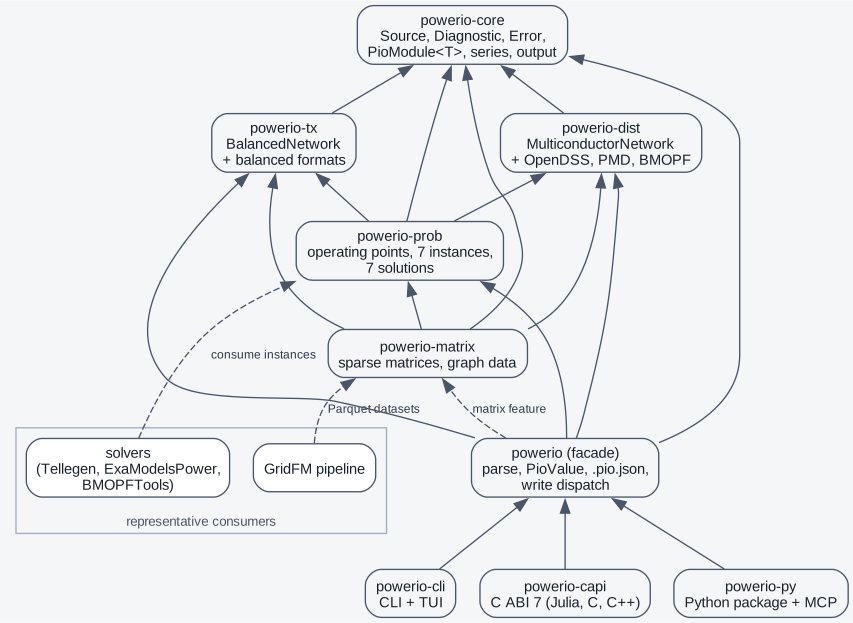
The facade does not force a consumer to depend on every component crate, and the two network crates are siblings with no edge between them. Solvers consume instances but sit outside PowerIO, and their workspaces and numerical caches stay outside with them.
Data flow
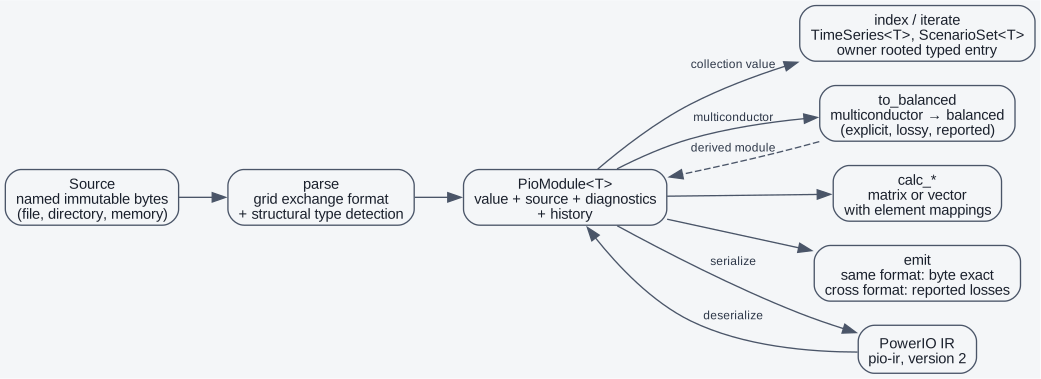
Every arrow out of the module is an explicit call that returns diagnostics; nothing is transformed as a side effect of something else.
The diagram sources are in docs/diagrams/*.dot.
scripts/check-architecture-map.py checks the drawn crate edges against
cargo metadata and, with --render, regenerates the images.